The key financial decisions and priorities for biotech startups
At our latest webinar, Hoffmann & Partner walked founders through what financial infrastructure you actually need at each stage, what you can safely skip and where the most common pitfalls are.
In this article, you’ll get 43 tips covering every phase of your journey, from choosing your first bank to negotiating preferred share structures with VCs.
What you will find on this page
- Meet BaseLaunch
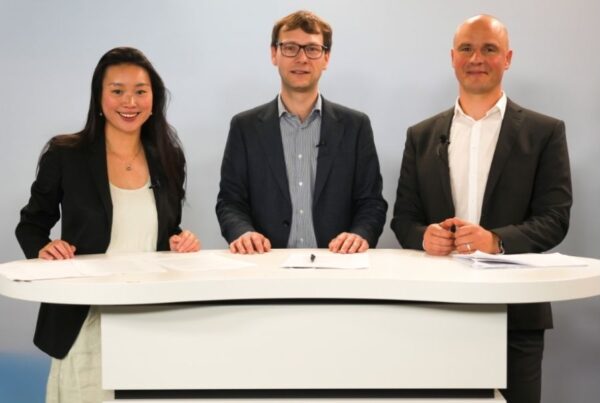
- Meet the experts
- About Hoffmann & Partner
- Tips on company setup
- Tips on financial operations at pre-see
- Tips on avoiding common pitfalls in pre-seed
- Tips on pre-seed financing
- Tips on financial operations at seed stage
- Tips on hiring at seed stage
- Tips on negotiating with VCs
- Tips on seed financing
- Tips on avoiding common pitfalls at seed stage
- Tips on financial operations at Series A
Meet BaseLaunch
Our mission is to further grow the biotech ecosystem in the Basel Area, one of the world’s premier life sciences hubs.
We provide groundbreaking startups with the funding, expertise and infrastructure they need to transform their ideas into industry-shaping solutions. So far, we’ve supported companies that have collectively raised over $1 billion in follow-on financing.
We also collaborate with industry leaders, domain experts and organizations to create opportunities for knowledge exchange and partnerships. Events like this are a key part of that vision, bringing together thought leaders to tackle the challenges and opportunities shaping the future of biotech.
Meet the experts



About Hoffmann & Partner
Hoffmann & Partner, one of our domain partners, is an independent financial advisory firm based in Basel, specializing in M&A and CFO services for Swiss and international companies. For biotech startups, their most relevant offering is part-time and interim CFO services. Early-stage companies can get access to experienced finance professionals without the cost of a full-time hire.
They also advise on financing rounds and exits across the healthcare industry.
”Biotech companies start with science, but in the end, they survive on capital. And capital only flows to those that are financeable, valuable and strategically relevant to large pharma.
Dr. Urs BreitensteinPartner Corporate Finance / M&A
4 tips on company setup
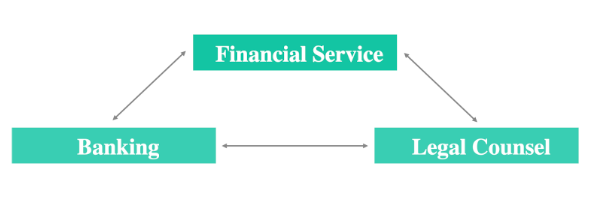
Your very first move should be assembling a barebone operations setup. This should form the financial backbone of your company: a bank, a financial service provider, and legal counsel.
These three partners will handle almost everything on the financial and legal side from incorporation onward. Get this right early, and your financial operations will run smoothly as you scale.
Tip #1: Choose partners who can scale with you.
You need partners who understand venture-backed biotech and can support you from incorporation through Series A and ideally to exit. You want to avoid switching providers mid-journey. Knowledge gaps and delays could hurt your fundraising efforts.
Tip #2: Use a Swiss bank with startup experience.
Look for a bank with a startup desk or biotech experience, full banking services and potential fundraising support. You’ll also want automation potential with your accounting software down the line.
Tip #3: Find a financial service partner who understands R&D-driven companies.
This partner handles all your accounting needs. They have to have startup expertise across all development phases, CFO service capabilities for seed and Series A support and the ability to scale with you.
Tip #4: Get legal counsel with financing and IP expertise.
You need strong corporate law foundations, startup and VC financing experience and solid IP and life sciences knowledge. They’ll draft all your financing contracts, so they need to understand how biotech fundraising works.
4 tips on financial operations at pre-seed
Financial operations at pre-seed break down into three areas: accounting, financial reporting and financial planning.
Tip #5: Start simple and low cost.
Outsource accounting quarterly on a light, flexible contract while you approve invoices, run payments and collect the documents. Store all your files digitally from day one, so you have a clean trail when it’s time for financial statements or due diligence.
Tip #6: Keep the reporting to a minimum.
Annual financial statements according to Swiss CO are legally required. At pre-seed, that’s all you need and your external financial partner can handle it for you. If you’re receiving funding from programs like Innosuisse or BaseLaunch, keep in mind that they often come with their own reporting requirements and timelines. Best track these separately so you don’t miss a deadline that delays a disbursement.
Tip #7: Build a milestone-driven cash budget and update it monthly.
You can handle the budget yourself and have it regularly reviewed by a finance professional. No need for an external controller tracking it at pre-seed.
Build a 12–18 month cash budget anchored to your scientific milestones and fundraising cycles in a simple Excel file. Update it monthly by tracking three lines: the original budget, your latest forecast and your actuals. This gives you an early-warning system before cash problems become emergencies.
Tip #8: Budget for six to nine months of fundraising.
Raising a round in biotech takes longer than most founders expect. Better build a buffer in from the start or you’ll run out of money while you’re still in conversations with investors.
5 tips on avoiding common pitfalls in pre-seed
The biggest pre-seed mistakes are made by taking shortcuts. They resurface months later, usually when an investor’s lawyer starts asking questions or when a financing round takes longer to close than expected.
Tip #9: Don’t hire too early.
At pre-seed, the workload rarely justifies full-time hires. Use consulting contracts and external service providers instead to keep your team flexible and your overhead low.
Tip #10: Set up your financial backbone before you need it.
Don’t make anyone have to reconstruct the gap of undocumented transactions between your incorporation and your first clean bookkeeping entry. Set up your financial service mandate before incorporation.
Tip #11: Don’t run company expenses through a personal account.
That can create various issues like tax reclassification risk and VAT problems.
Tip #12: Document every founder arrangement in writing.
Whether founders are deferring salary, working for equity only or paying themselves, there has to be a written contract. Informal setups are the first thing an investor’s lawyer will question during due diligence.
Tip #13: Don’t underestimate the time and cost of incorporating.
Setting up business in Switzerland takes time. Between payment of notary fees and share capital, commercial registering and legal counsel for the shareholder agreement, it adds up to weeks before you run your first experiment.
Question from the audience
Since a pre-seed company usually has no money, how can you engage a barebone operational team before getting funding rounds?
Banks, legal professionals and financial service providers in the startup ecosystem understand that early-stage companies can’t sign big contracts yet. Let them know you’ve just incorporated. Most will make time. And through networks like BaseLaunch, you have direct access to domain partners covering legal, financial and operational services.
5 tips on pre-seed financing
The goal of your first financing is to raise enough money to build the core team, generate first proof-of-concept data and prepare for the seed round. Ideally while preserving as much ownership as you can for as long as possible.
Tip #14: Maximize non-dilutive funding first.
Non-dilutive funding doesn’t require giving up ownership. In the Basel area, several strong options exist.
Tip #15: Use convertible loans to defer the valuation discussion.
When grants aren’t enough, you’ll need external investors. But at pre-seed, agreeing on a valuation is difficult. A convertible loan lets you sidestep that conversation. The investor lends you money, and instead of repayment, they convert the loan into shares at a discount during your next equity round.
Tip #16: Watch the 10/20 rule on convertible loans.
If you exceed 10 lenders on the same convertible loan or 20 lenders across all your convertibles, Swiss tax authorities can reclassify the loan as a bond. That triggers 35% withholding tax on the conversion discount, which many founders don’t expect.
Tip #17: Start your cap table early and keep it clean.
A cap table tracks all investors and their ownership stake. Include convertible loans and options, not just issued shares. Also don’t let your cap table get too crowded. It’s tempting to take money from anyone who offers, but too many small investors create complexity. Every name on your cap table is someone who needs to sign off on future decisions.
Tip #18: Add a drag-along clause to your shareholder agreement.
This lets you force minority shareholders to sell when you want to exit. Without it, selling 100% of the company becomes very difficult.
Want more tips on pre-seed financing?
The slide deck includes a worked example of how convertible loans convert at a discount.
5 tips on financial operations at seed stage
At the seed stage, you start handling more invoices and often for the first time payroll. Your financial infrastructure needs to step up but at the same time you need to avoid overdoing it.
Tip #19: Engage a part-time CFO.
A part-time CFO handles financial reporting and board prep, investor Q&A and due diligence support, budget ownership, grant management, cap table administration, insurance, treasury management and financial audits. And when an investor’s due diligence request comes in, you have someone who knows your finances inside out.
Get your CFO from Hoffmann & Partner
Hoffmann & Partner supports biotech startups with part-time and interim CFO roles from seed stage onward.
Tip #20: Set up formal approval processes for invoices and payments.
The founder team shouldn’t be running payments anymore. Your external financial service partner takes over while you approve invoices and sign off. This needs a formal process. You need to document who paid what, when and why.
Tip #21: Start quarterly investor reporting.
At minimum, report cash balance, burn rate and how long the money will last. Your investors may ask for more, but even if they don’t, quarterly updates build trust and keep everyone aligned.
Tip #22: Prepare your data room.
A data room is an online storage space where you give investors access to key documents like financial statements, legal contracts, cap table and patents. Start collecting these documents from the first day.
Tip #23: Upgrade your financial model to 24–36 months.
Your pre-seed Excel budget served its purpose. Now build a more sophisticated model tied to scientific milestones and fundraising cycles. Track budget vs. forecast vs. actuals monthly and implement a yearly budget process with your board.
5 tips on hiring at seed stage
Seed stage is when most biotech startups start hiring and more legal obligations start to kick in.
Tip #24: Get employment contracts right.
Every contract must be written and signed before the employee starts. It needs to define role, salary, notice periods, IP assignment and confidentiality. Talk to your legal counsel for templates that cover the Swiss requirements.
Tip #25: Complete all mandatory registrations before the first salary payment.
Register with the cantonal AHV/IV/EO authority, set up accident insurance (UVG) and choose a pension fund (BVG). It’s mandatory before any lab work begins and missing any of them creates penalty interest and compliance problems.
Tip #26: Verify work permits before signing contracts.
For non-EU/EFTA employees, obtain the work permit before the employment contract is signed. Paying salaries to people without valid work permits creates serious legal problems.
Tip #27: Use ESOPs to attract top talent without burning cash.
An Employee Stock Option Plan is a powerful retention tool, but it dilutes founder ownership, so use it mindfully and reserve it for key people.
Question from the audience
What is the best way to structure consulting arrangements from the start, especially if equity is involved?
Standard ESOPs dilute your cap table. Virtual or phantom stock options don’t affect dilution but come with different tax treatment for the recipient. Either way, use equity compensation mindfully, reserved for key people who are critical to pushing the company forward.
Tip #28: Claim Basel subsidies to extend how long your cash lasts.
If your company is based in Basel-Stadt, you can get up to 25% back on qualifying R&D personnel costs, plus an additional 3% for patent-related activities. There’s also a 50% rent subsidy capped at CHF 30,000 per year.
5 tips on seed financing
At this stage, you’ll likely have your first conversations with professional investors. You need to understand how investment rounds are structured and what the numbers actually mean to drive a strong negotiation.
Tip #29: Use comparable data for your valuation.
Don’t build elaborate financial models or revenue forecasts. For seed investors, what matters is how your company compares to similar companies at similar stages.
Tip #30: Understand pre-money vs. post-money valuation.
Pre-money is what your company is worth before the investment. Post-money is after. Example: CHF 8 million pre-money plus CHF 2 million invested equals CHF 10 million post-money. Sounds very simple but you have to always make it clear which number is being discussed.
Tip #31: Know the difference between undiluted, diluted and fully diluted.
Undiluted counts only issued shares. Diluted includes options that have been granted to employees. Fully diluted includes everything (granted options, ungranted option pools, convertible loans, etc.). You always need to know your fully diluted position.
Tip #32: Expect dilution, but find the right balance.
Dilution is normal. Founders typically go from 100% at incorporation to 75–90% at pre-seed, 50–75% at seed and as low as 5–50% by Series A through C. An overvaluation at seed can scare off future investors. Underpricing dilutes you more than necessary.
Tip #33: Stay focused on your own development plan.
Some early-stage companies try to generate revenue by offering services to other companies, hoping to reduce dilution. In practice, this rarely works well. Better stay focused on reaching the milestones that drive your next valuation.
Question from the audience
Is it possible to survive seed stage without a solid commercial model?
You need a commercialization story for your investor pitch deck with proof that this product can be sold and is worth developing. It’s just a strategic element of your narrative, not part of your day-to-day financial planning at this stage.
2 tips on avoiding common pitfalls at seed stage
The same principle applies as at pre-seed: most mistakes aren’t scientific. But now the stakes are higher because you’re managing more money, more people and more expectations.
Tip #34: Don’t overinvest in admin systems.
It’s tempting to buy licenses for every tool. But implementing too many IT systems too early blows up your costs for minimal gain. Your external partners’ systems work perfectly fine until Series A.
Tip #35: Don’t trust your bank balance.
Founders look at their bank account and feel comfortable but the committed spend just hasn’t left yet. Track what you owe, not just what you’ve paid.
Want more tips on avoiding common pitfalls at seed stage?
We’ve highlighted two, but the slide deck covers six. Download it to see what else can go wrong.
4 tips on financial operations at Series A
Series A is where your financial infrastructure goes institutional. You’re transitioning from a small team running on external support to internal systems, internal personnel and reporting standards that satisfy professional investors.
Tip #36: Start planning before the round closes.
This is the phase where you start hiring financial personnel like a controller, possibly an accountant, eventually a CFO. But you can’t flip the switch overnight. Communicate the transition plan to your external financial partners early and use a structured handover phase, typically several months, to make sure nothing gets lost along the way.
Tip #37: Deliver monthly reporting packages.
Financial reporting is now a contractual obligation to your investors. Expect to deliver monthly P&L vs. budget, balance sheet, cash flow statements and KPI dashboards to your board and quarterly investor updates on top of that.
Tip #38: Build a fully integrated five-year financial model.
Now you’re modeling full P&L, balance sheet and cash flow with clinical milestone triggers and go/no-go decision points to meet your institutional VC’s expectations.
Tip #39: Know when to hire a CFO.
A part-time external CFO can carry you through to Series A close and manage the financial due diligence process. But once the round is closed, a VC board member will expect a full-time CFO in the room and the added complexity justifies a full-time hire.
4 tips on negotiating with VCs
At Series A and beyond, you’ll be sitting across the table from professional investors. Understanding how they think about valuation and deal structure will make you a stronger negotiator.
Tip #40: Understand how VCs calculate your valuation.
VCs work backward from the exit. They estimate a conservative exit value based on scenarios like an M&A transaction or IPO, then discount it back to today using an internal rate of return. That gives them a post-money valuation. Subtract the investment amount and you get the pre-money.
Tip #41: Learn how preferred shares work.
VCs typically receive preferred shares with extra rights: fully participating or “double dip” (the VC gets their investment back first, then participates pro rata in what’s left), non-participating (the VC must choose between their investment back or converting to common shares) and participating with a cap (a middle ground where the VC participates up to a capped return, then founders catch up).
Tip #42: Know what’s the market standard in Switzerland.
Knowing these benchmarks based on an analysis of roughly 300 Swiss life sciences startups gives you leverage in negotiations: 52% used fully participating preferred shares, 33% used non-participating and 14% used a cap. A majority also included accruing dividends (not paid out in cash but added to the liquidation preference each year at a median rate of 7.5% of invested capital).
Tip #43: Negotiate preferential rights, not just valuation.
A high pre-money valuation means nothing if the preferential rights wipe out your returns at exit.
In one example, a founder owning 50% of the shares walked away with just CHF 5 million on a CHF 60 million exit because the VC held fully participating preferred shares with a CHF 50 million liquidation preference.
A well-balanced term sheet aligns incentives between founders and investors. If terms tilt too far in either direction, the other party loses motivation to push toward a successful exit.
Want more tips on negotiating with VCs?
The slide deck includes charts showing how each type of preferred share structure affects founder payouts at exit.
Join our next event
We hope the tips in this article and the full slide deck help you navigate the financial side of building your biotech startup with more confidence.
For an even deeper dive, join our next event. You’ll get the chance to ask your own questions, share your science and connect with people who are shaping the future of biotech.
Don’t miss your chance—events like this one are fully booked in no time!
Join BaseLaunch
If you’re just at the start (pre-seed or seed stage) of creating your therapeutic venture, BaseLaunch could be your right next step!
You can get up to CHF 500,000 in funding, direct access to global biopharma leaders, help with company and team development and access to state-of-the-art lab space and infrastructure.